



Alcohol Awareness Month—You Don’t Need a Rock Bottom to Become Aware
Rethinking What “Awareness” Really Means
April is Alcohol Awareness Month, and if you’ve ever come across messaging around it before, you’ve probably noticed that it tends to focus on the more extreme end of the spectrum. The conversation is often centered around addiction, crisis, and what we typically think of as “rock bottom.” And while those conversations are important and necessary, I’ve come to believe they are also incomplete.

Because they leave out a large group of people.
People who are high-functioning, multi-tasking, and successful. People who are showing up for their lives, managing careers, families, and responsibilities, and yet quietly wondering if something about their relationship with alcohol isn’t quite working the way they thought it would. People who don’t see themselves in the word alcoholic, and because of that, never think to question it more deeply.
That was the space I lived in for many years, and it’s the space so many of my clients find themselves in today.
Where Alcohol Awareness Month Began
Alcohol Awareness Month was first established in 1987 by the National Council on Alcoholism and Drug Dependence with the goal of reducing stigma and increasing public understanding of alcohol use disorder. At the time, this was an important and necessary step forward. Addiction had long been misunderstood, hidden, and heavily stigmatized, and bringing it into the open helped create space for more honest conversations.
But over time, that framing also contributed to a kind of binary thinking that still shapes how many people view alcohol today. You either have a serious problem, or you’re fine. You either fit the label, or you don’t. And if you don’t, there’s nothing to look at.
The Space Most People Actually Live In
The reality, of course, is far more nuanced.
Most people don’t exist at either extreme. Their relationship with alcohol lives somewhere in the middle, where things aren’t obviously falling apart, but they also aren’t entirely aligned. Maybe you’re drinking more than you used to.

Maybe it’s harder than it should be to stick to the limits you set for yourself.
Maybe your sleep, mood, or energy isn’t what it once was, and you can’t quite explain why.
But because nothing has gone dramatically wrong, those signals are easy to dismiss.
Why It’s So Hard to See Clearly
Adding to this is the fact that alcohol is deeply normalized in our culture. It’s woven into how we celebrate, connect, unwind, and cope. It’s also the only drug that often requires an explanation when you choose not to use it. If you decline a cigarette, no one questions it. If you say no to drugs, it’s expected. But say no to a drink, and suddenly there are questions, jokes, and subtle pressure to reconsider.
That normalization matters, because it shapes what we notice and what we ignore.

It also makes it harder to see the growing body of research that tells a more complete story. Organizations like the World Health Organization have made it clear that no level of alcohol consumption is completely risk-free, with even moderate drinking linked to increased risks of certain cancers, cardiovascular issues, and disruptions to sleep and mood. At the same time, we are learning more about how alcohol affects the brain and nervous system, including its impact on REM sleep, emotional regulation, and stress response.
And yet, despite all of this, many people are still asking the same question: Is this bad enough to count?
What Awareness Actually Looks Like
In my experience, awareness doesn’t begin with a crisis. It begins with something much quieter. It might look like waking up in the middle of the night and wondering why your sleep feels off.
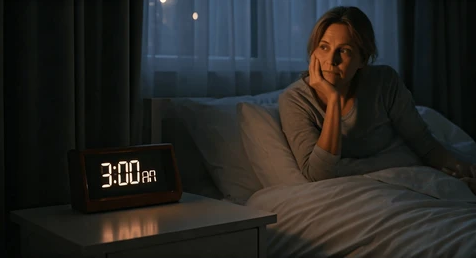
It might look like making a plan in the morning and watching it slowly unravel by the end of the day. It might look like noticing how much mental energy is going into thinking about drinking, or trying not to.
These moments are easy to overlook because they don’t feel dramatic. But they are often the earliest and most important signals that something is worth paying attention to.
A Different Way to Approach Alcohol Awareness Month
And that’s where I think we have an opportunity to redefine what Alcohol Awareness Month can be.
Not as a way of labeling ourselves, or deciding whether we do or don’t have a “problem,” but as an invitation to get curious. To step back and look honestly at our own experience. To notice how alcohol is affecting our body, our sleep, our mood, our energy, and our relationships. To ask, without judgment, whether it is truly serving us.
Because when you begin to see clearly, something shifts. Not through force or willpower, but through understanding. And from that place, change becomes possible in a way that feels far more sustainable.
Where to Begin
You don’t need a rock bottom to begin that process. You don’t need a label or a dramatic moment to justify paying attention. You only need a willingness to notice what is already there.
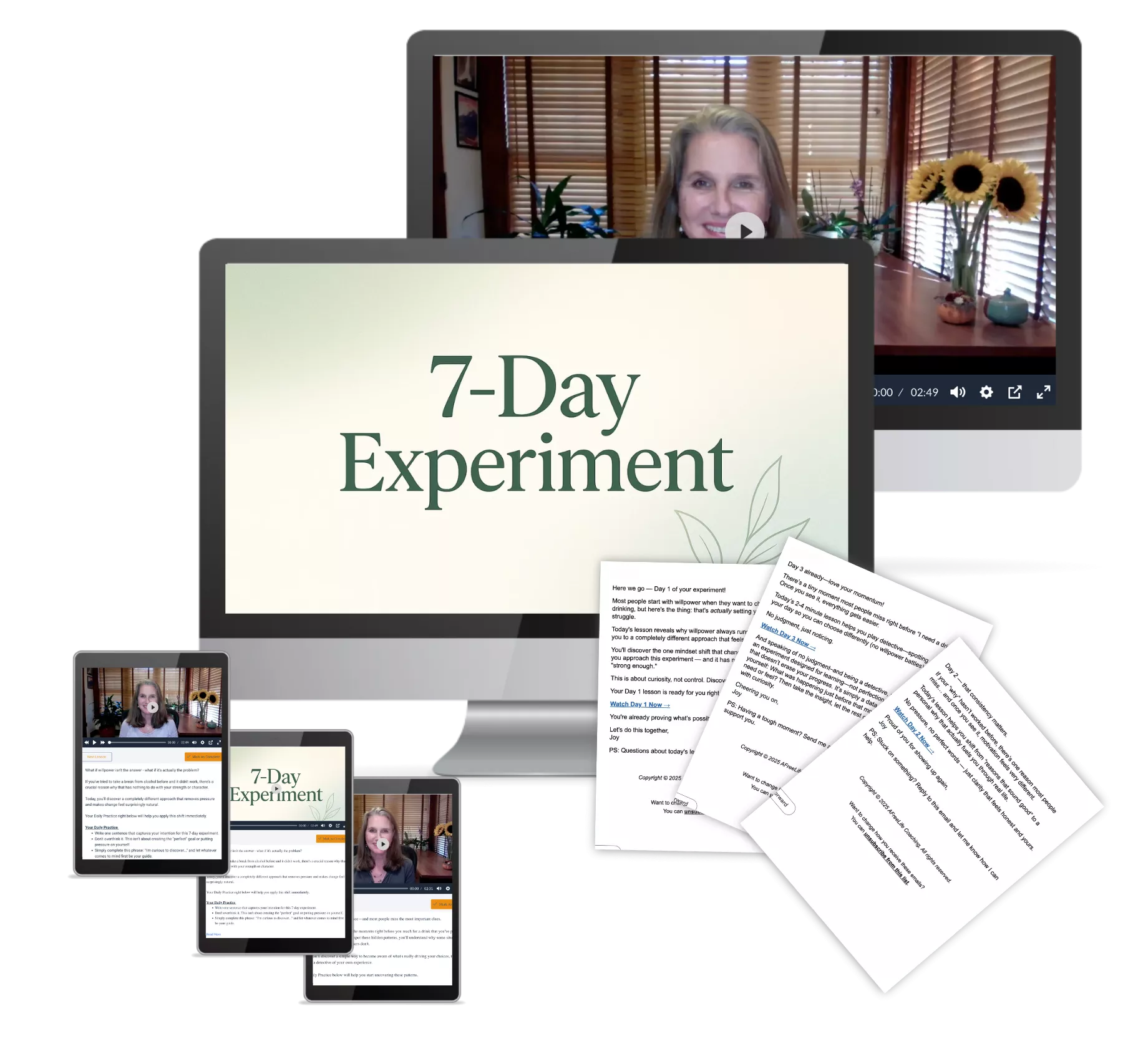
And if you’re feeling even a small pull toward that kind of awareness, one of the simplest ways to begin is through a short, structured experiment. Not as a commitment to quit forever, but as an opportunity to observe your patterns, your thoughts, and your experience with more clarity.
That’s exactly why I created my free 7-Day Experiment. It’s a gentle, guided way to explore your relationship with alcohol without pressure or labels—just curiosity, awareness, and a chance to see things a little more clearly.
Because awareness—real awareness—is where everything begins.


Please subscribe to Insights, our weekly newsletter for updates about events and more tools and tips for finding AFreeLife!



Joy Stieglitz is a certified Wellness Coach who specializes in helping sandwich generation people change their relationship with alcohol and/or other unwanted habits to find true freedom and joy in their life. Alcohol Free since November 2019, Joy brings valuable insights into her practice. AFreeLife Coaching is a safe space where all are welcome to explore their desire for health, wellness, and personal growth regardless of where they are or want to go on their journey, and regardless of age, race, gender, sexual orientation, religious affiliation, or any other social construct.
© 2026 - AFreeLife - All Rights Reserved - Terms of Service - Privacy Policy